
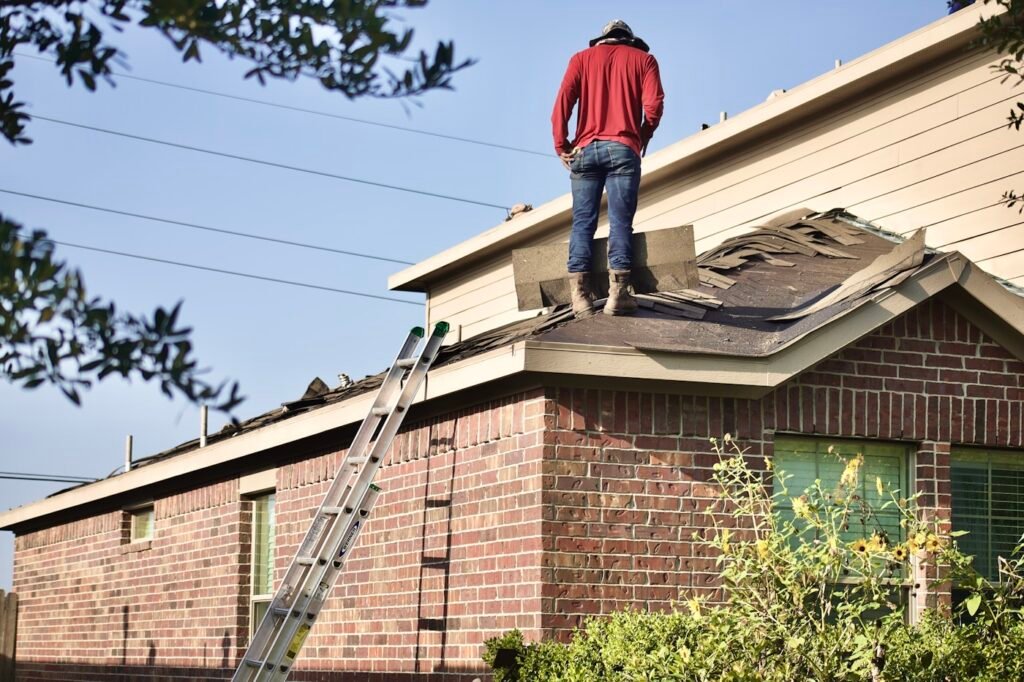
Spot developing roof problems early and prepare your DMV home for storm season.
1. Missing, lifted, or damaged shingles
Shingles that are cracked, curling, loose, or missing expose the layers below to wind-driven rain. After a storm, scan the roof from the ground and look for uneven sections or debris in the yard. Never climb onto a wet or steep roof. A professional inspection can distinguish isolated repair needs from broader wear.
2. Granules collecting in gutters
Asphalt shingles gradually shed granules, but heavy buildup in downspouts or gutters can signal accelerated wear. Granule loss reduces protection from sunlight and weather. Check during routine gutter cleaning, especially after hail or strong winds, and compare different roof slopes for unusual bare or shiny areas.
3. Water stains or changing indoor finishes
Brown ceiling marks, peeling paint, bubbling drywall, or a musty attic odor can point to roof-related moisture. The entry point may be far from the visible stain because water travels along framing and insulation. Prompt moisture investigation can limit interior damage and reveal whether flashing, penetrations, or roofing materials need attention.
4. Damaged flashing and roof penetrations
Flashing seals vulnerable transitions around chimneys, skylights, walls, and vent pipes. Gaps, rust, lifted edges, and failing sealant can allow water inside even when surrounding shingles look intact. These details deserve special attention during seasonal inspections and after temperature swings common in the DMV region.
5. A sagging deck or recurring leaks
A visible dip in the roofline, soft decking, or a leak that returns after surface patching can indicate a deeper problem. Schedule an inspection rather than repeating temporary fixes. Homeworks Restoration Services can investigate the roof, provide emergency protection when needed, document storm damage, and coordinate roofing, water mitigation, and interior reconstruction as one project.