
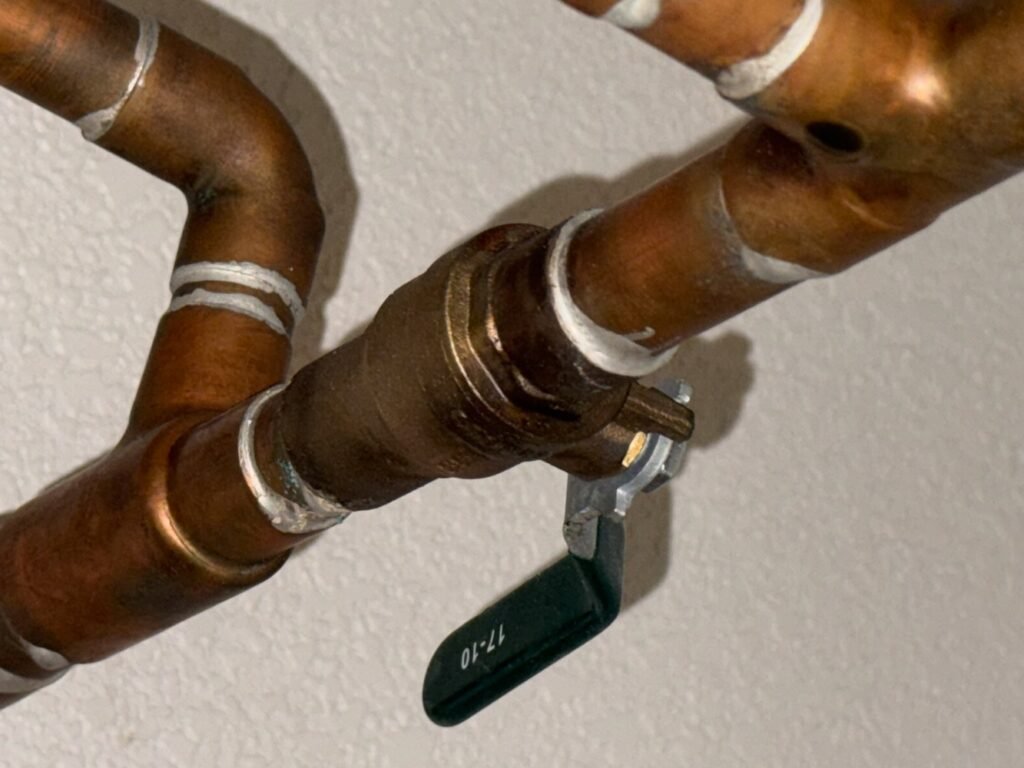
If a pipe bursts, stop and check the route to the water shutoff before moving toward it. A valve is useful only if you can reach it without entering standing water, passing electrical hazards, or going beneath a damaged ceiling.
When the route is safe and you know which valve controls the household water supply, closing it can limit additional water release. If you cannot identify or safely reach the valve, move people away from the affected area and call for help. Do not risk an injury to protect belongings.
First, keep people clear of hazards
Keep children and pets out of wet rooms. Avoid appliances, cords, outlets, and electrical panels that are wet or near standing water. Do not use an ordinary household vacuum to remove water.
CDC guidance on flooded homes warns against operating electrical equipment or switching power while standing in water. If shutting off electricity requires entering a wet area, have an electrician handle it. Stay away from a sagging ceiling or other signs of structural instability.
Call emergency services for immediate threats such as fire, suspected electrocution, or imminent collapse. If you smell gas, leave and contact the gas utility or emergency services from a safe location; do not operate switches.
Find the household water shutoff
The main household valve may be near the point where the water service enters the building. Its location varies, so the best time to identify it is before an emergency. Ask a plumber to show you the correct valve and label it clearly.
In a condominium, apartment, or shared building, contact building management if you do not know which supply serves your unit. A shared valve may affect other occupants or systems. Do not enter locked utility rooms or operate equipment you are not authorized to use.
Avoid operating a street-side utility valve or removing meter components yourself. If a leak cannot be controlled from an accessible household valve, call your water utility or a licensed plumber for direction.
Close only the valve you have identified
For a conventional lever-style quarter-turn ball valve, the handle is generally parallel to the pipe when open and perpendicular when closed. A conventional wheel-style household valve typically closes clockwise. Designs vary: follow the valve’s markings and the instructions a plumber has provided for your installation. WSSC Water explains common household valve arrangements.
Use gentle hand pressure. Stop if the valve is stuck, badly corroded, leaking around the handle, or difficult to identify. Do not use excessive force or an improvised extension that could break it. Tell the plumber that the shutoff itself may need attention.
Homes with fire sprinklers, boilers, or other water-dependent systems need a system-specific plan. Do not disable fire protection or turn unrelated valves while trying to stop a domestic plumbing leak.
Check the result from a safe position
After closing the correct supply valve, observe whether active water release slows. Water already inside pipes or building cavities may continue draining, so continued dripping does not automatically mean the valve failed.
If a strong flow continues, the valve may not fully isolate the source, or the water may be coming from somewhere else. Call the plumber or utility rather than cycling through additional valves. Do not reopen the water to “test” a damaged pipe before a professional has assessed it.
Tell the plumber if the home has a well, a boiler, a water heater, or another system that may be affected by loss of supply. Follow their instructions and the equipment manufacturer’s directions; there is no safe one-size-fits-all appliance shutdown sequence.
Arrange pipe repair and water-damage help
A licensed plumber handles the damaged plumbing and decisions about restoring supply. A restoration contractor assesses affected building materials and the work needed to dry and repair the property. Ask who is responsible for each part so an important step is not missed.
For damage to a Maryland, DC, or Northern Virginia property, learn about Homeworks’ emergency services and water damage restoration. Call Homeworks Restoration Services at 240-817-3559 to discuss the affected areas and available next steps.
Record a few useful details
Once people are safe and the water source is being addressed, note when the leak was discovered, which valve was closed, and which rooms were affected. Photograph visible damage from dry, stable areas. Do not delay hazard control to make a complete inventory.
Keep plumbing and restoration estimates, photographs, and receipts together. Contact your insurer for claim-specific instructions and coverage questions. No checklist can determine whether a particular loss is covered.
For the broader recovery sequence after the immediate hazard is controlled, read what to do in the first 24 hours after water damage.
Prepare now for a less confusing emergency
Label the household shutoff, keep the access path clear, and place a flashlight nearby. Ask another adult to show you the valve without prompting. If the location or operation is uncertain, arrange a plumber’s visit before winter.
A short practice walk-through helps turn “somewhere in the basement” into a clear, usable plan.
Featured photo: “Water Pipes and Water Shutoff” © Tony Webster, licensed under CC BY 2.0. Resized for web display. Illustrative plumbing photo.
